ON MANIPUR

About the author – The author of this article Subhendu Bikash Tahal is a Lecturer in Political Science.

From the lap of nature in Africa to the age of artificial intelligence, from chaos, barbarity, and anarchy to order, peace, and tranquility, from stone man to the age of complex civilization. The journey of ours is a fascinating tale of unfolding human imagination and increasing humanity. The tale is a tale of how human beings buried their horrific and barbaric tendency- the tendency of killing one another indiscriminately in the lap of nature, to give way to the polished urbanity characterized by respect for human dignity. But, under the veneer of humanity lay the hobbesian nature of Human beings- solitary, nasty, brutish, poor and horrific that appears frequently in testing times. The real and horrific nature of human beings we thought has been buried under the civilization seems to me like a deceptive outward appearance. The news, the news that appeared on 21st July in the Times of India with the headline that two women paraded naked in Manipur revealed and reinforced once again that prophetic statement which is repeated ad nauseam that human nature is bad.

Rape, murder and resorting to arms are not alien to human beings. They were once the most visible tendency when we had been wondering from the dawn to dusk in search of food in the jungles of Africa. They were the manifestations of the law of fisheries, were the symbol of power, strength and superiority. But that was the by-gone era of a state without the state and government, an era of anarchy, lawlessness and violence. Today, when we have a mighty and overarching state with a powerful government at the helm of affairs with the promise to protect the life and dignity of an individual, the scene of two tribal women being raped and paraded naked has not just shaken the collective conscience of the nation but at the same time betrays the promise made by the state, the promise to offer protection of the life, liberty and dignity of an individual.

This is blood curdling to see the contrasting and paradoxical picture in India. On the one hand we are witnessing and celebrating great feats in science and technology in the form of Chandrayan and on the other hand bloods are shed continuously in the form of ethnic conflict. Achievements in science and technology bring laurel to the nation as a whole, catapulting India into the elite club of few nations with such credible record, however, the inaction and apathy of the state to the most basic issue of protecting the dignity of women is something we must feel ashamed about. When the state fails to offer the basic protection, all achievements in other domains are insignificant.

If we scratch the surface of humanity, barbarity is what we will get to see underneath. The violence, irrationality and domineering attitude is deeply embedded within us. Suppression and oppression on the relatively weaker section is the norm. Look at the instances of how human beings treat the nature and women. The nature and women in a constructed and manufactured reality are treated as weaker and subordinate. They are the most adversely affected in times when the man let loose his barbarity. In the times of anarchic situation like war or in the event that is unfolding in Manipur, the dignity of women is taken as hostage; the weapons used wreck havoc in the nature. The nature has a way of responding, it expresses its fury in the form of natural calamity causing death, destruction and devastation. But, the women who constitute the half of human populace suffer silently in the hands of man.

What is the point of coming so far – from the Stone Age to this age of augmented reality and Artificial intelligence? The progress has no meaning if the same barbarity continues and the state stands as a mute spectator in the face of such heinous crimes against humanity. The issue of Manipur must not be treated as an isolated event occurring in silos, unrelated to the chain of events that take place regularly, rather the connection must be established – the connection that is there in each act of violence.  The unconnected events are connected through the thread of human nature that is dominating and barbaric. The time is ripe to ponder over this issue of human nature and put a rein on it before it gets too late.


The Tell -Tale Heart  – A review

About the author – The author of this article Subhendu Bikash Tahal is a Lecturer in Political Science.

The only a way to escape the reality is to go fictional and live in the midst of characters populated by the figment of a writer’s rich imagination. The reality is grim, so grim that it makes one afraid with its hard facts and soft pretence. The day was not hectic. I had a plan to do something, to read some academic stuff, to go for a long hour sleep. But the mood swings faster than the pendulum. While surfing internet over a cup of tea The Tell -Tale Heart by Edgar Allan Poe appeared from nowhere.  The titled captured my imagination. It is dramatic to say that the title was enthralling nonetheless interesting. As the modern practice goes when something interesting  appears over the screen of a phone that makes an excellent bait taking one farther from the intended objective and closer to something which was never conceived at the first place.

The title of the story worked exactly like a bait for me capturing my attention and compelling me to read the entire story. It’s a short story. The story begins with the assertion that I had been and am nervous but definitely not mad. That sentence conjured up in my mind of a character which is being wrongly perceived as a mad man but indeed he isn’t.  And the story ends with a confession that “I admit the deed! – tear up the planks! – here, here!” The last sentence is indicative of the confession of a crime committed. A psychological trait – nervousness, dominates throughout the story. Whether the man is mad or not would only come up as we proceed form one stanza to the other. But he is nervous and the dominance of nervousness makes the story a psychological one.

The story proceeds swiftly with ease while carrying a baggage of contradiction at its back. The narrator of the story kills an old man. He compares the eyes of the victim with that of a vulture. That eye irritates the narrator and the narrator at the end being taken over by the passion kills the victim. However, some strange assertion by the narrator would puzzle you as a reader. The narrator who killed the victim writes “Object there was none. I loved the old man. He had never wronged me. He had never given me insult. For his gold I had no desire”.  Then why did he kill the old man? The narrator claims that the eyes of the old man which resembled that of a vulture annoyed him and that was the reason why he killed that old man.

 The narrator’s love of the old man and his murder of the victim in the same paragraph is an apparent contradiction. It is a contradiction because a murderer can’t be a lover and a lover can’t murder the person to whom he loves. Murder is an action of last resort; it is committed not out of love but extreme hatred propels one to commit such a heinous offence. Though literally love and murder are not antonyms yet they are antithetical. Love as a psychological trait brings out a strong sense of care and a protective blanket. Either the assertion of the narrator that he loved the old man was sheer pretence or there are some major psychological flaws in him.

The claim that he loved the old man but the eyes of the old man irritated him is an attempt by the writer to separate the old man from the eye. To simplify this, it means that he loved the old man but not his eyes. If we love someone a minor flaw in the body is always ignored. But the narrator killed the old man because of his annoying eye while loving all other parts of the body. This underscores two important things – first, either the writer has not been successful to bridge the contradiction in his writing or the writer strives to justify the insanity of the narrator with which the short story begins.

There is another obvious contradiction which stares at the face of the reader waiting to be identified is that when the narrator says that he proceeded to kill the old man and dismembered the corpse to conceal it with great caution; but at the end he under no pressure from the cops discloses everything- the truth, the truth of killing the old man. Though, at times even a confident man discloses the truth to the cop, but only under severe pressure. But the manner in which here the narrator discloses the truth is bit awkward. The narrator was confident and there was no sign of suspicion, he himself writes “The officers were satisfied. My manner had convinced them. I was singularly at ease.”  But suddenly he grew pale. He said to himself that “I could bear those hypocritical sounds no longer!”  And he revealed everything.

 If he was at ease and there was no pressure from the police then revealing the truth to police symbolises the Madness. What is the point of meticulous planning if at the beat of a heart everything is revealed? A closer look at the text reveals that the narrator in his vigorous attempt to prove that he is not insane, himself confesses the crime  by stating that he had made all the meticulous plan and only a sane man can make such plans. This is nothing but the insanity of an insane. The meticulous plan was made to conceal the crime yet the plan is being revealed to prove that he is sane.  

The line is blurred between insanity and sanity, nervousness and confidence. A man is sane when he has the ability to overlook certain aspects and control himself. A sane man turns into insane immediately when he loses control over himself and passion takes over him; he behaves irrationally. The narrator throughout the story attempts to justify his irrational act to prove that he is a rational man.  The attempt of the writer to show the fragility of the human mind and the consequence of obsession is a message worth reading. Overall, I thoroughly enjoyed the story. Indeed, this is a story worth reading.

The Decline of Reason

WRITTEN BY SUBHENDU BIKASH TAHAL


Religion is an emotive issue. It is the opium of the masses. It is what it is without having any parallel in the real world. For seers, it is the only way to a dream paradise and the shrewd, use it as a tool to make the people taste the taste of a hell. It is a faith in the supernatural beyond the bounds of reason, a shelter for the oppressed and a shock absorber for the oppressor.  Since the inception of the Homo sapiens as a dominant species, religion has been the most important connector that has connected the discreet yet disconnected individuals. However, the opposite is also true; it is the most potent divisive force that has created major fault lines in the society, tearing them apart like pieces of paper. There is no shortage of example. India as an independent country took birth from the churning of river of blood that flowed because of the fault-line created by religion.

The history of religion is as old as Homo sapiens. It had dominated the entire socio- political landscape in the past. However, the ‘Reason’ gave a death blow to the force that had hitherto dominated, in the form of Enlightenment; ushering in a new era of hope, of progress and of optimism.  The age of reason began. It began as the progress in science enlightened the human mind, unleashed its true potential. The superstition gave way to the logical thinking, it took the men away from the ocean of ignorance towards the shore of knowledge; the reflection was evident everywhere, society and the sphere of politics were no exception to it. Society became more rational, questioning the hitherto unquestionable and Church withdrew from the sphere of politics as a result of defeat in the fight between the Sword and Crozier.

Democracy further reinforced the case of reason by facilitating discussion and deliberation which gradually led to its triumph.  The Reason triumphed, but religion had not taken a backseat; rather it coexisted, it had remained dormant for years because it couldn’t pass the scrutiny of reason. But the irony is the reason has been receding at an accelerated pace over the years. Public sphere seems to have been  captured by the force of religion.  From America to India and Iran, everywhere religion is again on the rise. The recent overturning of the Roe v. Wade judgment is a prelude to the events that are going to unfold in the land of reason and liberty. The Shia-Sunni conflict in the international arena is an open secret. Even, India is no exception; the recent killing of a man is a significant testimony. The influence of religion in the public sphere is at its maximum today than ever had been in the recent centuries.

In the tussle between the force of reason and the force of religion to occupy the narrow space of consciousness, the force of reason seems to have lost to the antiquated force of religion. But what led to its decline /defeat? Who are responsible for it? The decline in reason is not a decline that generally results because of the natural cycle of rise and fall. The decline is deliberate.  It is due to the attempt of a few academician and politician who strive to maintain their hegemony. They deliberately push the agenda, taking the mass media to their fold to divide people on the religious lines. The intellectual academician and acclaimed journalist make concerted attempt to dig graveyard for the same ‘Reason’ of which they are product of. The situation is further exacerbated by the faulty education system which instead of promoting critical thinking and logical abilities produce robot who say yes to the boss in every matter.

Science has progressed; technology might have taken us to the moon, nevertheless, the human mind is still primordial in the matter of supernatural, and there is no dearth of people to stoke the fire of religion to further their goal. Religion is no doubt a unifying force, however, using it for the reasons that the societies of today are using would take us further back in time.

Anger is a fire that needs cooling; it is a wound that needs healing.

Author- Subhendu Bikash Tahal

The purpose of being a human is to attain Eudaimonia or happiness.  But the secret to happiness is shrouded in mystery.  Layers of wisdom, millions of books and thousands of Monks share the quickest ways to be happy, the shortcut to attain the divine mission. In contrast there are teeming millions who are suffering day in and out for various reasons.  Modern civilization is based on the premise that there is a causal relationship between happiness and increasing material well being. On the contrary the ancient wisdom tells us the doctrine of “happiness through asceticism”. In the light of these mutually contradicting ideas, which occur in pairs, human beings have been mired in the maze of confusion. To choose the best possible way to remove these worst nightmares of unhappiness seems like a distant dream- unsearchable, unattainable and even unimaginable.

Thich Nhat Hanh in his book  “Anger”  writes “ the most basic condition for happiness is freedom.” Here he doesn’t  not mean political freedom, but freedom from the mental formations of anger, despair, jealousy, and delusion. Anger is the most important of all reasons that lay at the back of a life that is led unhappily. A life led unhappily is a life un-led. Anger is a violent expression of emotion that wreaks havoc to self as well as others. It is characterized by antagonism for others. It is cyclonic. The cyclonic velocity of the wind, which emanates from anger, causes immense destruction to the mental health affecting happiness directly.  It is something that is squarely responsible for stress, trauma and mental imbalances.

Anger is an emotion. It is a reflection of pain. It is violent. It is destructive. But it is transparent. It reflects human fragility. It demonstrates our vulnerabilities. It is negative and positive too. History is a testimony to the events that have occurred because of human anger. Whether the American War of Independence or French revolution.  Whether the storming of Bastille or the Boston Tea party. Whether Sepoy Mutiny or Dandi March are all examples of anger channelized in the right direction against brutality and injustices. Anger in the colonial state against oppression brought the brutal British Empire down. But anger is not all that glamorous as I have portrayed or painted. That Anger in mass which brought the English down had lifted the Hitler up. On the one hand anger emancipated the masses from the suppression and oppression, on the other it emasculated them leading to their brutal killing in the Holocaust.  

Anger in mass has shaped the course of history. It revolutionized our ways and means of looking at things. But anger in an individual is always harmful. An angry individual is reactive. His imagination is clouded. His senses are paralyzed. His ties are broken. His past is wounded. His present frustrated and future worsened. There are so many triggers that trigger anger in an individual. An individual brought up in a climate of rife strife or wide spread conflict is more likely to spew the venom of anger in the latter years of his life. An individual’s socio-political or economic situation or his personal life may act as triggers. But whatever may be the reasons of the trigger, we must have to appreciate the fact that anger is a fire that needs cooling, it is a wound that needs healing.  

No one would ever like to be angry in the light of the irreparable damage that it causes, but one gets angry wittingly or unwittingly, for reasons that need to be grasped. His anger has to be tamed with love , sympathy and empathy not with the similar flame of fire. He needs love not hatred, compassion not indifference, positivity not negative energy.

SORRY! THE NEWS IS NO MORE

About the author- The author of this article Subhendu Bikash Tahal is a Gold medalist in BA(POL.SC) and currently pursuing Post-graduation in Political science at Utkal University, and has also qualified for Junior Research Fellowship(JRF) and eligibility for Assistant Professor in the National Eligibility Test(UGC-NET). 

Without batting an eyelid we killed the news. Yes, we killed it, killed it by dangling the news by its leg, and smashing it against the shadow of the news- noise. In fright and out of shock the news died, but it died an unlamented death. Under duress the news anchor of our primetime TV debate killed it. The news that was the Prime embodiment of our civility is no more. The news in all its form has been killed by a coterie of self-proclaimed intellectually sound Anchors who claim to defend the freedom of free speech. However, the intellectually disconcerting effects the death has have left a profound imprint in the minds of the lover of debate.

Over the years the newsroom acted as a vent to let the fury of the opposition out in the public and ensured accountability as a pillar of democracy has all of sudden lost all its credibility. The difference between civilization and barbarity lies in the way the Individual actors within the frame confront each other. Civilization gives a framework to conduct debate and discussion without becoming a violent pawn of anger and frustration, while in contrast barbarity spurs the anger, encouraging the forceful and illogical to be a pawn of his own anger and win over others by force.

Look at the way the newsrooms conduct debate these days devoid of intellectually compelling argument the newsrooms are loaded with emotive and visceral issues, stoking the fire of hatred when they can, are vitiating the narrow space for intellectual engagement. Riding on the coattails of the advertising partners instead of promoting parley, they sow, with their grandiloquent and pompous vocabulary, the seeds of hatred and disagreement.

We are the proud inhabitants of a liberal democracy, the edifice of which is based on the self-worth and dignity of the individual. But did you see how the sustained attempt of character assassination by the newsroom anchors finally influenced the institutions to run after someone for a long time? Here the fundamental debate which has long been left to academia surfaces, the debate between free speech and individual dignity. J S Mill, the celebrated English philosopher said ‘all mankind minus one doesn’t have the right to stifle the voice of one Individual’. But let me ask you this question in a distinct fashion- should we allow all our media to snatch the dignity of an individual in the daylight? Silent as we are, voicing solidarity, standing by their side by paying our subscription, and watching them, we are not only harming our pure reason but have become complicit in the assassination of the News.

As abettors, the remedy must begin with us, we must strive for the resurrection of the news because without the news the nonsensical noise will dominate which will pollute our sacred space of engagement and may turn into the last straw to snatch the democratic rights which have long been taken for granted by us. A biased media is a gravedigger for liberal democracy for they hide the hideous facts and promote a regime presenting the romantic aspects of the men in power. The underhand dealing between the power-thirsty politicians and their status hungry Media Partners ultimate result in the casualty of not only the news but also the democracy as a system of government.

The entire world is eavesdropping on us, the largest and the vibrant democracy on the earth. Can we really afford to lose our sight of the degeneration of the media undergoing through? “The eternal vigilance is the price of liberty”, freedom comes with a responsibility, are we ready to be responsible? Or else we will solely remain responsible for the things that are not too far.

HAS INDIA FAILED IRAN?

 About the author- The author of this article, Subrat Pradhan, is a science graduate in zoology, UN College, Cuttack.

The NDA Government in 2019 proved that the people of India are with them as they added 2.0 to the front with their spectacular victory and made it NDA 2.0. The Saffron party rose to power and prominence selling the dreams of development (Vikas). However, whether or not everything has been achieved is a point of  debate, deliberation and discussion.

But, this write-up, far away from the rhetoric of daily politics focuses on our relationship with the countries that matters to us. Since the day the Party has been in power under the able leadership of the Prime-Minister Modi, it has been winning laurels for its performances in the domain of foreign policy. India’s global standing has gone up  and even many claim that India has emerged as a global leader over the few years owing to the spectacular achievements of the Government.

However, not everything is hunky-dory, the story has some twists. In the past few years though India has strengthened its ties with Western countries, it has been less focused on its own neighbourhood, leaving its own backyard for China. The growing tensions with China, Pakistan, Nepal and Bangladesh to some extent exemplify India’s neighbourhood policy.

Anyhow India has managed to tackle these issues or suppressed it down; the periodic emergence of such problems need to be taken care of. The only two neighbours with whom there have been less problems are Bhutan and Afghanistan. Others being inclined towards china for funding make it clear for the rifts in relations. China Encircled India through its strategic String Of Pearls(SOP), perceiving a threat, India  countered it by the historic Chabahar port project. The project not only neutralised  SOP but also the effects of CPEC as it opens India to the central and west Asia.

Further the development of Delaram-Zaranj Highway has opened India’s market access to Afghanistan. Chabahar port is technically the vigilant eye on Gwadar port from where Pakistan and China will operate. The role of Iran for India is strategically essential no doubt in that. The recent news of Iran ending its partnership with India for development of Chabahar-Zahedan railway project citing delay in funding shows India’s casual approach towards Iran despite  knowing its importance. So far there have been three statements. 1) Iran drops India from Chabahar rail project. 2) Iran has no agreement with Indian Government for developing rail project 3) The agreement was between Iran railways and IRCON (state owned company). The game of words is on.

Iran’s claim is to develop the rail project with its own Iran National Development Fund. However assumptions are being made that the funding could be from the Dragon. Amid pandemic, ties between the USA and India look unbreakable. But Delhi needs to be cautious of Mr. Trump’s America first policy, he is not someone who can be taken for granted.  So long the USA is appeased  things will look well-settled. However, Iran’s relation with the USA is well known to the world. So making a  balance between the USA and Iran is like to bell the cat.

Now India has lagged behind in this game as India’s only hope to reach central Asia is at stake. Though nothing to worry about chabahar project as for now works are in progress. Still India needs to speculate the consequences if Iran drifts away. Disturbances with Pakistan, china, Nepal and the sudden emergence of Iran have questioned the foreign policy of Government for which it has always been credited. Instead of playing with words Government should find the reasons for delay in funding and approach Tehran to figure out the solution as it is high time now.

Why Thokiraj is harmful.

About the author- The author of this article Subhendu Bikash Tahal is a Gold medalist in BA(POL.SC) and currently pursuing Post-graduation in Political science at Utkal University, and has also qualified for Junior Research Fellowship(JRF) and eligibility for Assistant Professor in the National Eligibility Test(UGC-NET). 

A criminal should be encountered; he should be killed instantly by the police. If the criminal didn’t care about the human rights of those, who faced his bullets and stabbed to death with his knife, then why should precious time be wasted in arranging a fair trial for someone who committed heinous offences in the past- brutally  killing the security personals and laymen alike. He should be treated with all the brutality and harshness he subjected people into. “Agar apradh karenge toh thok diye jayenge.”  Gangster Vikas Dubey’s encounter reinforces and reiterates the above  statement more than  ever.

However, there is a difference between “thoki raj”( Indian express, Pratap Bhanu) and the raj of rule(rule of law).  While the former emboldens the police to kill a criminal, the latter restricts them. The Rule of law ensures transparency and safeguards individual liberty.  The rule of police curtails liberty and elevates chaos under the garb of order to  the uneven plane of administration. “Thoki raj” can either be a result of brimming emotions or a consequence of unholy nexus. But both emotions and unholy nexus are harmful for the rule of law owing to their crippling of the criminal justice system.

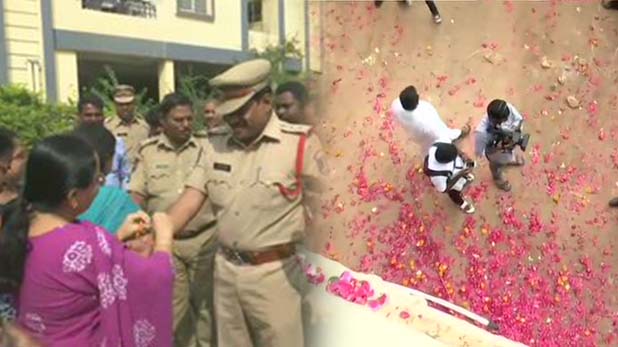
India  adheres to the principle of rule of law. Here, rule reigns not individual. It follows separation of power- legislature formulate laws, executive enforce the law, and judiciary ensures fair play. India has a constitutional scheme, which to be followed for every act of omission and commission by the public officials.  The extra judicial killings are blatant violation of the foundational principles underpinning the democratic order. But these are not new in India, neither these are aberrations; rather under the cloak of self-defense the police encounter criminals and the cases of encounters are increasing faster than before. In Priyanka Reddy case the public showered rose petals on the police displaying their support for an act which was legally corrupt.

Representative image

The chief function of judiciary in criminal justice delivery system  is to give one what he or she deserves- retribution or unfettering of the shackles. The police only act as investigator; they maintain law and order and strengthen evidences against the person to be accused or acquitted by the court of law, if proved or disproved respectively. India has a vibrant Judicial system, although highly overloaded but functional and efficient. Its over-burdened feature  spurs masculine police officers to kill the criminal imagining the truism that “justice delayed is justice denied”, and  gaining post-facto public support   for their stellar performances while forgetting on the other hand the principle of “innocent until proven guilty”. It is efficient because it retains its impartiality even if delayed thereby evoking profound respect from the public.

  A criminal thrives under the patronage of police and politicians, the symbiotic relation breaks instantly when the criminal comes to the lime light. In the apprehension of they being exposed, they perpetrate plans to wipe the criminal out. Had Vikas Dubey been thoroughly investigated, he would certainly have exposed the labyrinth of criminal world.  His death washed away with him, all the secrets of the criminal world and let the criminal world flourish untouched by the rule of law. Justice hurried is thus justice buried.

Extra judicial killings point fingers at our system of policing and the system of justice delivery. Sometime the excuses, that police are humans like us and they would attack when they are attacked overburdened by their work, lack of enough officials, and faulty training devoid of ethics, are cited. However it’s a systemic failure which undermines the entire judicial framework.  Extra judicial killing is not something to be encouraged, it is no substitute to justice. Instead of encouraging the police officers, they should be held accountable for steeping out of their jurisdiction, speedy trial should be ensured, stringent action should be taken against the police officers involved. Thokiraj is harmful because it conceals more than it reveals.

The solution to suicide is structural overhauling

About the author- The author of this article Subhendu Bikash Tahal is a Gold medalist in BA(POL.SC) and currently pursuing Post-graduation in Political science at Utkal University, and has also qualified for Junior Research Fellowship(JRF) and eligibility for Assistant Professor in the National Eligibility Test(UGC-NET). 

Suicide is no less than a pestilence, it kills around 800 000 people annually,  The World Health Organization (WHO) reports that one life is lost to suicide every 40 seconds. Although people of all age groups are vulnerable to this consequence of mental illness, but it affects the most to the youth, the potential demography who can bring  dividend to their families and nation at large, are falling prey to the allurement of last resort. The death of Sushant Singh Rajput, Prakesh Meheta,  and now a  16 year old artist Siya kakar should compel the intellectual elite and policy makers in India to take this issue seriously.

Jermy Bentham in his finest work ‘the principle of morals and legislation’ writes “Nature has placed mankind under the governance of two sovereign masters, pain and pleasure”; we seek pleasure, accept it with exhilaration but want to avoid pain, when the pain outweighs the pleasure, when it becomes intolerable, one finds the easy option of killing herself.  However, suicide should never be treated as escapism , it is not that someone  escaped from the brute realities of life by committing suicide, rather, the brute realities of life  subsided the individual underneath its heavy weight and the excruciating pain that resulted from it, caused tremendous mental agony breaking the individual into pieces, forcing her to claim the most precious of everything that is her life.

In Shakespeare’s Hamlet,  Gertrude- mother of Hamlet(the tragic hero), narrated about the death of Ophelia. Ophelia, the beloved of Hamlet, a teen age girl, crumbled under the weight of psychological pressure and committed suicide. Suicide thus exposes the vulnerabilities of being a human, the extent of emotional fragility, the need of love, compassion,  honour, hope, status, meaning, pride and forgiveness.  Suicide also exposes the meaninglessness of wealth, property, opulence, and the difficulty of getting the message across. It is a malady, we all are vulnerable to, particularly the youths. Leaving behind the trails of age old belief system, which  for every success or failure made the fate responsible, as Society travels on the upward trajectory of development, it gradually places the individual at the centre of her failure and success; the anthropocentricism, of which the meritocratic order is a reflection of, burdens the individual with the fear of failure because of her own frailty, resulting in frustration, anxiety, and depression.

Death of Ophelia

Suicide is not a simple isolated event that can be understood in silos, rather it is a part of complex socio-political reality, a product of social, political and economic arrangement. Liberalism, the guiding idea which drives the nation states today, places competition at the heart of its socio-economic arrangement, it pushes the idea of competition to seep into the minds of every individual, then creates an illusion of meritocracy. In the name of merit liberalism has helped the privileges to perpetuate their power and authority; meritocracy is a mere deception which helps the intellectually bankrupt liberalism to sustain itself as a set of ideas.

In fact why someone commits suicide? What is the relation between the political-economic arrangement and suicide? One individual commits suicide when she can’t ascribe the reason of her failure to her social, political or economic circumstances and finds herself the sole reason for all the failure and wrongs that occurred to her. Liberalism, as a set of ideas, gives priority to individual efforts, makes individual the sole author of her happiness and sorrows alike, forgetting how the structures of society impacts individual efforts and the consequence thereby.

To illustrate this, take the example of two individuals one from Bombay and other from Bihar, the individual from Bihar took birth in a rustic circumstance, from parents who are poor, unable to provide the sophisticated private education; in contrast, the individual who took birth in Bombay,  got admission in the famous private school  by virtue of her parents’ lavish salary. But both the individuals have been hardworking and dedicated , now imagine in the liberal framework they have been left to compete, who would achieve the most out of it, who would succeed at the end- the one who can afford everything or the one who can’t afford even the cost to pay his college? Is it a fair competition?  Both worked hard, but the result would always  favour the privilege;  the so called looser,  in the competition without understanding the

structural constraints that don’t allow her to a fair competition for upward mobility, attributes the reason for her failure to no one but to herself, then with lost hope, the anxiety that develops compels her to commit suicide. This competition is not limited to high class vs low class, even within the highest echelon of economic strata the competition for supremacy, self worth and domination takes place and once again the looser out of anxiety decides to close the chapter of her life.  

Suicide is the inevitable result of an egoistic and competitive mindset, which judge every phenomenon on the scale of success or failure, whether failure in examination or failure to get your beloved attracted toward yourself, everything is judged on the binary of success and failure.  When someone fails, she commits suicide as a permanent solution to the temporary problem of mental trauma. One commits suicide  when she fears to face the fear, the fear of failure, the fear of loosing something or someone.

Suicide is less a psychological phenomenon, more a structural reality, the twin factors of competition and fear, push an individual to claim her life. The solution to the problem is not merely mental counselling   but structural overhauling. A society that perpetuates the idea of competition through an ideology is bound to face its negative consequences,  the replacement of competition with the benevolent cooperation is a way forward which will go a long way to remove the malice of mental trauma.

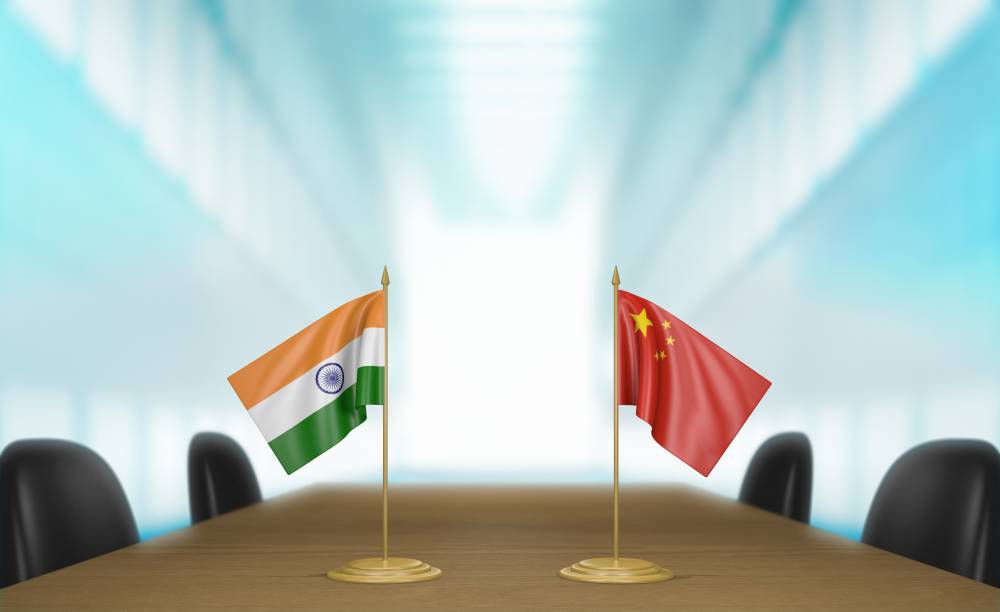
India and China – the partnership that will determine the fate of global governance by Subhendu Bikash.

About the author- The author of this article Subhendu Bikash Tahal is a Gold medalist in BA(POL.SC) and currently pursuing Post-graduation in Political science at Utkal University, and has also qualified for Junior Research Fellowship(JRF) and eligibility for Assistant Professor in the National Eligibility Test(UGC-NET).

Since the global financial crisis of 2007-08, the economic backlash against globalisation has been increasingly evident. However, India was an exception as Mr. Modi, the poster boy of the cultural backlash against globalisation rose to power and prominence  while retaining his image as the “davos man” , the image of a globalized elite. Whether globalization, a boon or bane, is a controversial issue, but India has accepted it with ecstasy and has strived over the years to lift millions out of poverty by integrating the economy  of India with the economy of the world. The 2019 global Multidimensional Poverty Index (MPI) released by the UN Development Programme (UNDP), and the Oxford Poverty and Human Development Initiative (OPHI) exemplifies the fact that India  has lifted 271 million people out of poverty between 2006 and 2016. Apart from the two backlash against globalization- economic and cultural; in India each time there is a military confrontation between India and China, a huge public reaction erupts against the Chinese products. As a military confrontation is going on the LAC, the same anti-Chinese sentiment is reigning  supreme over the mass as a mark of nationalistic fervour.

India and china had been the light house of civilization  for centuries when Europe and America were shrouded in darkness. Europe rose to glory during the industrial revolution and  America  dominated the world in much part of the twentieth century and continues to enjoy the prominence even in the twenty first century.  If 19th century was the century of Europe, 20th  century, the century of America, then certainly 21st century is going to be The Asian century. The Asian century, a vision suddenly conjures up the names of two Asian giants – China and India. The cooperation and conflict between the  two regional powers will define the Asian century and its course.

The relationship between the two countries is as old as history. The cultural, intellectual and trade ties goes back to the days of silk road. To forge an Asian partnership, the Prime Minister of India immediately after the establishment of People’s Republic of China (PRC)  in 1949, evinced the vigour and not only  set up diplomatic ties with PRC  in 1950, but also pleaded for the PRC’s membership in the UN. Yet, the issue of Tibet emerged like thorn in the rosy relationship between the two neighbours.  India and China signed an “Agreement on Trade and Intercourse between the Tibet region of China and India”  on 29th April 1954 which is known in the  public memory as the historic Panchsheel Agreement to elevate the relationship to a new plane by resolving the bilateral disputes. These were the heydays of Indo-china relationship which was soon to plummet to new lows in 1962 with the Chinese invasion on India. The history of Indo-china cooperation and conflict is a chequred one, replete with instances of strong friendship and bitter enmity.

As China and the United States came  closer after 1972 and India perceived a threat in the China-U.S.-Pakistan axis, it got attracted to create a strong relationship with   former Soviet Union to balance the axis. It was in 1988 Rajiv Gandhi’s visit broke the ice and  a Joint Working Group (JWG)  was set up to explore solutions to the vexed boundary dispute.The  Prime Minster Atal Bihari Vajpayee visited China in June 2003. The Joint Declaration  expressed the view that China was not a threat to India.  Special Representatives were appointed  in order to provide momentum to border negotiations that had lasted for more than two decades, with the Prime Minister’s principal secretary becoming India’s political-level negotiator, replacing the India-China  JWG. During  Manmohan Singh government also the relationship went on in an   upward trajectory. But the last five years have seen increasing tension  in Dhoklam and now in Ladakh,  however, the rising tension have also been accompanied by political will to resolve the conflict and not letting the differences to escalate into dispute,  the finest examples are two informal summits first in Wuhan and second in  Mamallapuram.

China is India’s largest trading partner, but China enjoys a huge surplus while India is having a trade deficit. In fact the United States of America is also having a huge trade deficit with countries like China and India. In a globalised world where economies have been intricately linked as never before, self-sufficiency is not something the nation-states strive for, trade enables a country to specialize in one aspect and bridge the gap in the domestic market by importing from other countries. Trade deficit with one country is not always a sign of weak economy. Trade deficit with China simply signifies  that Indians buy more Chinese products than vice-versa.  However,  continues  trade deficits across all countries increases burden on the foreign exchange reserve and demonstrates a countries inability to produce anything.   

Social media and even in the streets of India, as an expression of anti-Chinese sentiment, a campaign is going on to stop buying the Chinese products, lest it will cripple the Chinese economy. But a close observation at some statistics proves this compelling argument illogical because while “China accounts for 5% of India’s exports and 14% of India’s imports, India’s imports from China (that is, China’s exports) are just 3% of China’s total exports. More importantly, China’s imports from India are less than 1% of its total imports. The point is that if India and China stop trading then — on the face of it — China would lose only 3% of its exports and less than 1% of its imports, while India will lose 5% of its exports and 14% of its imports”(Indian Express). Therefore the idea of crippling Chinese economy is only a mere rhetoric without any substance, rather it will affect the consumers and producers in India adversely.  Consumers would be affected because of the unavailability of the low cost goods and producers will have to bear the burden because they no more can obtain the intermediate goods. Ultimately, the deterioration in trade ties will exacerbate the overall relation and confrontation will be more frequent than before on the frontiers.

Trade locks the countries in the  web of dependency and assuage the tension, use of  trade as a means of negotiation will give India more bargaining power. But if the mass sentiment on the streets of India are allowed to influence the foreign policy decision then it will worsen the relationship and will have short term and long term negative consequences for India. Foreign policy, although is designed to advance the interest of a State but never fashioned to gratify the voters on the street, efforts to score brownie points will only take India and China closer towards a warlike situation, and the dream of Asian century characterized by partnership between the two Asian giants will only remain in words in journal and academic text books.

To let the vision of Asian century see the light is a responsibility of both the powers and only a strong partnership between the two giants will determine the fate of Asia in the world.  Nationalism is a rising phenomena across the globe, which propels the country to look inward shaking off the global responsibility; it’s a critical period in the history  of global governance where traditional powers are going more inward , but like every crisis this also provides an opportunity where India and China can rise to the occasion and can transform their position from rule taker to the rule maker; coordination between the two countries will determine the fate of global governance and the role of Asia in it. Being Atmanirbhar is always a great vision but it shouldn’t come as a cost to the flourishing relationship.  The policy makers in India have to remember that that the partnership between the two ancient civilization will place us in the cockpit of global governance, however, China should also ensure that it rises peacefully.

The journey from the land of the stranger towards the land of his mother by Subhendu Bikash

About the author- The author of this article Subhendu Bikash Tahal is a Gold medalist in BA(POL.SC) and currently pursuing Post-graduation in Political science at Utkal University, and has also qualified for Junior Research Fellowship(JRF) and eligibility for Assistant Professor in the National Eligibility Test(UGC-NET).

The consummate veneer which had been used to wrap up the festering wound is no longer able to cover up the wound, time demands a serious response, without which no chemotherapy in future may work and the entire body will have to succumb to the wound. Four decades of socialism, and liberalization since 1990s, have not served the purpose of the men languishing at the lowest rung of economic pyramid. In search of jobs, fascinated by the opportunities and moreover, pushed by the poverty; a self respected individual who till then had been working on the field, changes his colour and through a middleman finally reaches the land of skyscrapers, hoping that now he could drench the stomach of his family by being able to provide square meal per day.

 On one fine day when the sky is clear, the environment is calm, when the earth has not been shaken, he hears the news from his fellow colleagues that a virus from the distant land has invaded India and he has to fight against the Virus as a soldier; then his unofficial conscription starts- no job , no social security, no savings; with his unrecognized efforts, his undervalued contribution, his underlooked labour, and no longer being able to tolerate the terrestrial radiation in empty stomach, without money in pocket, he starts his arduous journey again back towards his village, his own land; from the land of the stranger towards the land of his mother. The government meanwhile to save the millions of lives from the fatal covid-19 locks the entire country down; from cities to villages the  word ‘social distancing’ spreads like wildfire.

However, Trudging mountainous roads, difficult terrains the labourers, the men behind the flourishing cities  walk thousands of kilometers, without food and potable water, defying the call for social distancing; and their plight being covered by national media shakes the collective consciences of the nation. In a harrowing event exposing the hollowness and the deep reality of our socio-political structure fourteen men die of train mishap.

It appears like an old story; but the underlying message behind this story must be unwinded by the policy makers. The fragility of our economic system has been exposed. The men and women who build the cities, who work in factories, have been left to live their lives in destitution. Tired, dispossessed as they are, now in the village, don’t have the luxury of enjoying the social distancing, they need an immediate economic succor, and the government’s allocation for MGNREGA, although appears to be a panacea, however, hasn’t helped anyone as states have not evinced the much needed vigour.

The effervescence of achieving economic prosperity has died down,   in one fell swoop the pandemic and the subsequent lock-down have stolen all their dreams, shattered all their hopes;  bereft of money and on the brink of devastation, they are waiting for a helping-hand, hoping that the pandemic would soon go away and everything would come to normalcy. Some died while returning home, some returned home but with no penny in pocket are on the verge of economic paralysis.

When the Prime-minister decided to appear on the screen their ecstasy reached on the apogee, being overwhelmed by his magical words and announcement of a huge package of 10% of the GDP, finally they realized that someone at the top of the pyramid looks after them- the men on the bottom, maintaining the required equipoise and binding the entire societal pyramid with the thread of love, help and compassion. His clarion call to help the poor families became music to their ear, but soon this was to be belied with the five tranches announcement of the Finance Minister.  Her second tranche of announcement deals with Poor, including migrants and farmers; but no relief, only lip service.

Every cloud has a silver lining, every problem ushers a new hope, every crisis renders the opportunity to ponder and reflect on the past and start a new journey. Two questions which must be asked at this critical juncture, first, why people from villages throng towards the cities? And second, is it feasible to resolve this crisis?

Political scientist Professor Zoya Hassan writes “in India, the lockdown favours the “balcony classes”, with no regard of its consequence for others.” In India every policy helps the balcony classes, how this lockdown would have been an exception? Since independence the uneven economic development, the callousness of the policy makers towards the development of the hinterlands results in large scale migration. Lack of jobs, disguised unemployment, natural disaster, crop failure, no alternative economic opportunities, discrimination of various sorts push the people towards the cities, and the dazzling lights of the cities hold them there. However, in cities the distressed individuals work in hazardous condition, the safety net of labour laws are distant dreams for them; the social security schemes- they have never heard of, devoid of all the basic requirements they work there only because they don’t have any option. Once the economic engines cease to function, the daily wage earner’s hand turns numb, the obsession of tomorrow haunts him, the lack of food inflicts him physical and mental trauma. But in a situation like pandemic they face the double whammy of poverty and fear of being contracted with the virus; and once contacted,  the loss of immunity  may make the body the safest place for other viruses, thus weakening the individual physically, breaking him mentally, downgrading him socially and pauperizing him economically.  As she rightly puts it  “ Nobody is safe from the virus but some classes are more protected than others”,  some classes are more vulnerable  than others.

The question of feasibility of resolving the crisis doesn’t arise, because this is not a simple crisis, it’s a festering wound, if not operated immediately will bring the body into collapse. The pandemic has brought into the lime light the luxury of the few and pathetic tales of the many, the glaring inequalities. The policy makers have to bridge this gap not just by resurrecting the economy but extending the nurturing effects of the policy towards the hinterland and empowering the individuals at the lowest echelon of the economic strata. The crisis offers the opportunity to redress the long standing grudge of the society, which had been forgotten. It’s upon the policy  makers to tap into this opportunity and take India closer towards the goals set by the founding fathers of our Republic.