About the author- The author of this article Subhendu Bikash Tahal is a Gold medalist in BA(POL.SC) and currently pursuing Post-graduation in Political science at Utkal University, and has also qualified for Junior Research Fellowship(JRF) and eligibility for Assistant Professor in the National Eligibility Test(UGC-NET).
Suicide is no less than a pestilence, it kills around 800 000 people annually, The World Health Organization (WHO) reports that one life is lost to suicide every 40 seconds. Although people of all age groups are vulnerable to this consequence of mental illness, but it affects the most to the youth, the potential demography who can bring dividend to their families and nation at large, are falling prey to the allurement of last resort. The death of Sushant Singh Rajput, Prakesh Meheta, and now a 16 year old artist Siya kakar should compel the intellectual elite and policy makers in India to take this issue seriously.
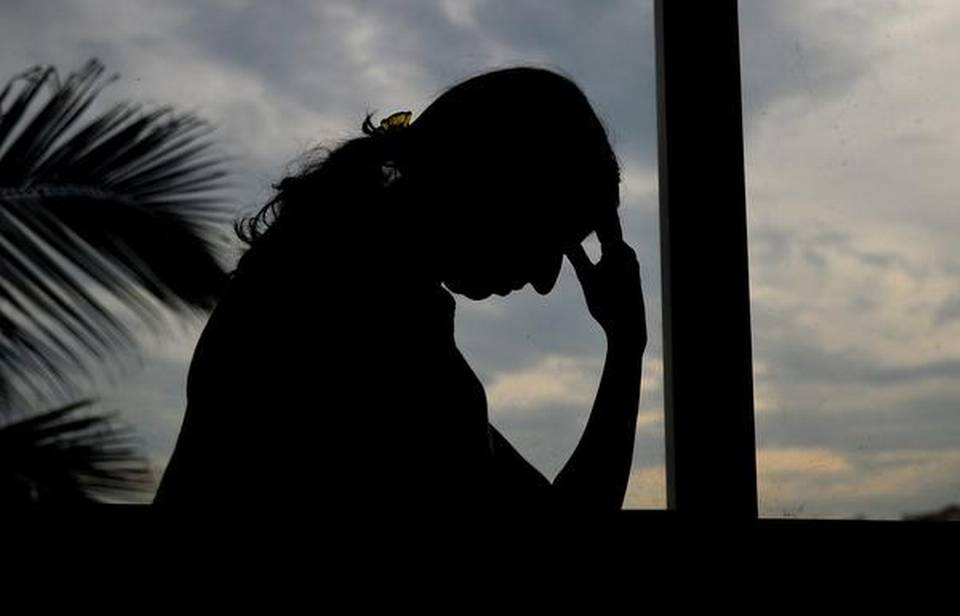
Jermy Bentham in his finest work ‘the principle of morals and legislation’ writes “Nature has placed mankind under the governance of two sovereign masters, pain and pleasure”; we seek pleasure, accept it with exhilaration but want to avoid pain, when the pain outweighs the pleasure, when it becomes intolerable, one finds the easy option of killing herself. However, suicide should never be treated as escapism , it is not that someone escaped from the brute realities of life by committing suicide, rather, the brute realities of life subsided the individual underneath its heavy weight and the excruciating pain that resulted from it, caused tremendous mental agony breaking the individual into pieces, forcing her to claim the most precious of everything that is her life.

In Shakespeare’s Hamlet, Gertrude- mother of Hamlet(the tragic hero), narrated about the death of Ophelia. Ophelia, the beloved of Hamlet, a teen age girl, crumbled under the weight of psychological pressure and committed suicide. Suicide thus exposes the vulnerabilities of being a human, the extent of emotional fragility, the need of love, compassion, honour, hope, status, meaning, pride and forgiveness. Suicide also exposes the meaninglessness of wealth, property, opulence, and the difficulty of getting the message across. It is a malady, we all are vulnerable to, particularly the youths. Leaving behind the trails of age old belief system, which for every success or failure made the fate responsible, as Society travels on the upward trajectory of development, it gradually places the individual at the centre of her failure and success; the anthropocentricism, of which the meritocratic order is a reflection of, burdens the individual with the fear of failure because of her own frailty, resulting in frustration, anxiety, and depression.

Suicide is not a simple isolated event that can be understood in silos, rather it is a part of complex socio-political reality, a product of social, political and economic arrangement. Liberalism, the guiding idea which drives the nation states today, places competition at the heart of its socio-economic arrangement, it pushes the idea of competition to seep into the minds of every individual, then creates an illusion of meritocracy. In the name of merit liberalism has helped the privileges to perpetuate their power and authority; meritocracy is a mere deception which helps the intellectually bankrupt liberalism to sustain itself as a set of ideas.
In fact why someone commits suicide? What is the relation between the political-economic arrangement and suicide? One individual commits suicide when she can’t ascribe the reason of her failure to her social, political or economic circumstances and finds herself the sole reason for all the failure and wrongs that occurred to her. Liberalism, as a set of ideas, gives priority to individual efforts, makes individual the sole author of her happiness and sorrows alike, forgetting how the structures of society impacts individual efforts and the consequence thereby.
To illustrate this, take the example of two individuals one from Bombay and other from Bihar, the individual from Bihar took birth in a rustic circumstance, from parents who are poor, unable to provide the sophisticated private education; in contrast, the individual who took birth in Bombay, got admission in the famous private school by virtue of her parents’ lavish salary. But both the individuals have been hardworking and dedicated , now imagine in the liberal framework they have been left to compete, who would achieve the most out of it, who would succeed at the end- the one who can afford everything or the one who can’t afford even the cost to pay his college? Is it a fair competition? Both worked hard, but the result would always favour the privilege; the so called looser, in the competition without understanding the

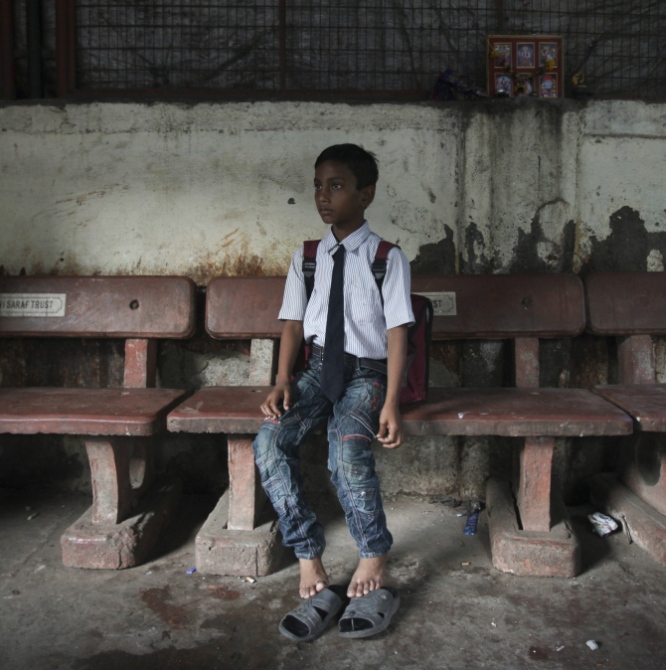
structural constraints that don’t allow her to a fair competition for upward mobility, attributes the reason for her failure to no one but to herself, then with lost hope, the anxiety that develops compels her to commit suicide. This competition is not limited to high class vs low class, even within the highest echelon of economic strata the competition for supremacy, self worth and domination takes place and once again the looser out of anxiety decides to close the chapter of her life.
Suicide is the inevitable result of an egoistic and competitive mindset, which judge every phenomenon on the scale of success or failure, whether failure in examination or failure to get your beloved attracted toward yourself, everything is judged on the binary of success and failure. When someone fails, she commits suicide as a permanent solution to the temporary problem of mental trauma. One commits suicide when she fears to face the fear, the fear of failure, the fear of loosing something or someone.
Suicide is less a psychological phenomenon, more a structural reality, the twin factors of competition and fear, push an individual to claim her life. The solution to the problem is not merely mental counselling but structural overhauling. A society that perpetuates the idea of competition through an ideology is bound to face its negative consequences, the replacement of competition with the benevolent cooperation is a way forward which will go a long way to remove the malice of mental trauma.

 Subhendu's blog
One of the best pieces I have read on the topic in the recent times. The reference to Bentham is exceptionally good. The crux of your article about how suicide prevention can come with structural changes is thought provoking. Keep up the good work.
LikeLike
Thank you Reetika.
LikeLike